
Wildfire haze, road soot, and spring pollen make cabins stuffy and scratchy. Most factory filters only catch larger dust. The smallest smoke particles keep slipping through. A true HEPA element - paired with smart HVAC use - can drop in-cabin particulate fast and keep eyes and lungs calmer.
This guide shows how to verify real HEPA claims, which models fit well, and how to install one without rattles or leaks. You will also learn the HVAC settings that actually clean the air instead of just moving it around.
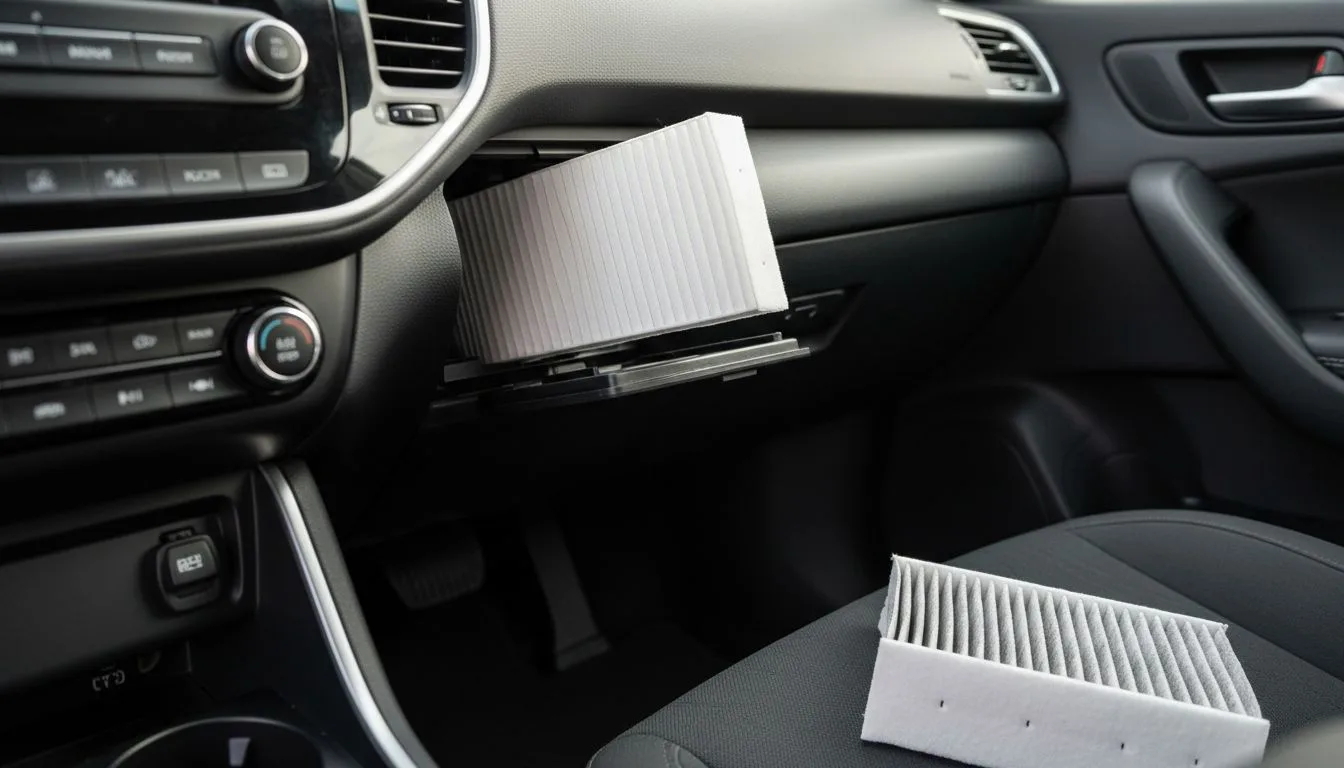
How to spot a real HEPA claim for car use
HEPA is a measured performance, not a marketing word. Look for 99.97 percent efficiency at 0.3 microns. That size is the hardest to catch and a benchmark in ISO 29463 and EN 1822. Smoke and soot have a lot of particles from 0.1 to 1.0 microns, so submicron capture matters.
- Insist on a printed statement like 99.97 percent at 0.3 µm with a test reference such as ISO 29463 or EN 1822. HEPA-like is not credible.
- If a HEPA claim is missing, check ISO 16890 ePM1. An ePM1 80 percent or higher filter removes most PM1 smoke particles, even if it is not labeled HEPA.
- Scan the spec sheet for pressure drop at rated flow. A typical cabin element runs 50 to 120 Pa around 100 to 150 CFM. Higher resistance can raise fan noise on top speeds.
- Carbon-only elements handle odors and some VOCs but miss ultrafine particles. A smoke-ready element uses dense particle media, sometimes with a thin carbon layer added.
Media efficiency is not the whole story. A loose door seal or bowed pleats can create bypass leaks that undo the gains. A well-sealed ePM1 80 percent part can beat a sloppy HEPA frame with gaps. Fit and sealing count.
Filters that consistently perform and actually fit
Bosch HEPA Premium part numbers worth a look
Bosch markets several frames as 99.97 percent at 0.3 µm, including common sizes like 6055C and 6029C. The media is dense and supported so pleats do not collapse as they load. In wildfire haze, these parts knock down PM1 and PM2.5 quickly on recirculation.
Expect a trade-off. Thickness and density can trim peak airflow a bit. You might hear a new whoosh at fan 5 or 6. Price typically lands between 22 and 45 USD depending on size and whether a carbon layer is included.
Fram TrueAir HEPA vs Fresh Breeze
Fram’s HEPA line is labeled TrueAir. Do not mix it up with Fresh Breeze, which targets odors more than ultrafine particles. TrueAir HEPA versions often add activated carbon for smell control alongside the particle media.
Coverage is broad for popular sedans and compact SUVs. If your commute runs through late summer smoke, a TrueAir HEPA that fits your car is a practical pick. Where the HEPA variant is not offered for a specific housing, you may need to choose a different brand to get submicron capture.
Mann-Filter FreciousPlus for European cars
MANN-FILTER FreciousPlus FP series focuses on allergens, PM2.5, and odors, with a biofunctional and carbon layer. It is a strong choice for many Audi, BMW, and VW applications, and build quality is excellent. For example, FP 26009 is common in several VW and Audi housings.
Limitation: most FP parts are not claimed at 99.97 percent and 0.3 µm. In heavy wildfire smoke, a Bosch HEPA or Fram TrueAir HEPA may reduce the finest PM1 more, depending on fit and fan speed.
Washable panel filters are not built for smoke
Reusable options like the K&N washable cabin element prioritize airflow and long service life. They cut waste and can feel cost effective over years. For ultrafine smoke, they do not match HEPA capture. Pick washable only if reusability matters more than smoke reduction.
Measure the housing and confirm fit before buying
Cabin elements hide behind the glove box, under the passenger dash, or in a cowl slot at the windshield. Some Toyotas and Subarus stack two pieces. Many Hondas and Mazdas use a single wide panel. Tesla Model S and Model X use a separate large biofilter system outside the standard slot.
If online fitment looks fuzzy, pull the old element and measure it. A ruler works fine. Note length, width, and thickness in millimeters and keep the airflow arrow orientation in mind.
- Common frames include 225 x 200 x 30 mm and 216 x 194 x 25 mm. There are dozens of sizes, so verify yours.
- Match airflow arrows on the housing and frame. They usually point toward the blower - often downwards.
- For dual stacks, order the kit that includes both pieces. Mismatched heights cause gaps and dust bypass.
- On vehicles like Toyota Camry, VW Golf Mk7, and Subaru Outback, the door gasket must seat evenly or efficiency plummets.
Step by step swap that takes 10 to 20 minutes
Most DIY swaps need a Phillips screwdriver, a Torx T20 for some VWs, and a trim tool. Park on level ground, switch HVAC off, and crack the doors for a minute to dump built-up dust. Keep a small vacuum handy.
- Empty the glove box so nothing jams the hinge or damper.
- Unhook the glove box damper cord if fitted. It slides off.
- Squeeze or unclip the side stoppers so the box drops further.
- Locate the rectangular door on the HVAC case. Pop tabs or remove small screws.
- Slide the old element out slowly. Note the airflow arrow and dust pattern.
- Vacuum the cavity and wipe the sealing ledge for a clean gasket surface.
- Insert the new HEPA element with the arrow toward the blower.
- Ensure pleats sit flat. Do not pinch the media or bow the frame.
- Reinstall the door until it clicks, then reattach damper and stoppers.
- Start the car, set fan low, and listen. Increase speed and check for a whistle that hints at a misaligned edge.
Vehicle quirks: Honda Civic and CR‑V glove boxes drop once the stoppers are squeezed. Toyota Tacoma side tabs can be brittle - use a trim tool, not a screwdriver. VW MQB cars often hide a T20 screw under the dash trim. Subaru Crosstrek and Outback stack two pieces - install the upper first, then the lower.
HVAC settings that cut smoke and pollen fast
Use recirculation so the element sees mostly cabin air. That speeds reduction and avoids a constant stream of outside smoke. Run the fan at a moderate level instead of max. Efficiency can fall if high pressure drives bypass through small leaks. Keep A/C on to dry the air and prevent fog.
On a heavy smoke day, purge heat first. Open all doors for 20 seconds or run fresh air briefly while moving, then close up and switch to recirc. Some cars crack the outside flap in Auto mode during defrost or dehumidify cycles. If smoke is thick, turn Auto off and hold a manual vent mode.
- During wildfire season, plan shorter intervals. Replace every 5,000 to 8,000 miles or 6 to 8 weeks of heavy smoke.
- If odors linger, choose a HEPA model with activated carbon. Expect a small airflow penalty and a higher price.
- Long recirc raises CO2, which can cause drowsiness. Briefly pull fresh air for 15 to 30 seconds every 15 to 20 minutes if conditions allow.
Cost, maintenance, and proof your upgrade worked
Budget 20 to 60 USD per element. HEPA plus carbon lands near the top of that range. As media loads, pressure drop increases, and the blower sounds harsher at higher speeds. If airflow falls or the windshield fogs easier, it is time to swap.
Particles and odors behave differently. HEPA targets particles. Activated carbon handles many VOCs like benzene and formaldehyde, but it saturates. Smell can return even while particle capture remains strong.
A quick check is simple. Use a handheld PM2.5 meter like a Temtop M10. Create a small controlled source outdoors with one incense stick. With the car closed and on recirc at fan 2 of 6, you should see in-cabin PM2.5 fall to a fraction of outside within about five minutes - for example, from 120 µg/m³ outside to under 25 µg/m³ inside, depending on leaks and fan setting. If it does not, reseat the frame and inspect the recirc door foam.
Counterintuitive but real: more fan is not always better. If the housing or door leaks, high pressure can increase bypass and raise PM in the cabin.
Frequently asked questions
Will a HEPA upgrade damage my blower motor?
A quality element adds resistance but stays inside design margins. Expect about 50 to 120 Pa at roughly 120 CFM on mid fan. Keep the cowl intake and drain paths clean. A clogged intake raises load more than the filter does.
Can I stack a prefilter to extend life?
Do not add extra media unless the housing was built for it. Stacking often prevents the door from sealing, which increases bypass and dust inside. It also increases pressure drop and noise. Replace more often instead.
Do I need carbon for wildfire events?
For haze and particles, HEPA is the fix. For odor and VOCs, you need carbon too. A HEPA plus carbon element reduces smell at the cost of a small airflow penalty and higher price.
How do I align the airflow arrow correctly?
Match the housing arrow if present. Otherwise, point the frame arrow toward the blower fan - usually downwards in glove box housings.
A quick plan that works in real smoke and pollen
Pick a verified element first. Bosch HEPA Premium or Fram TrueAir HEPA are the go-to choices for smoke. Look for 99.97 percent at 0.3 µm or at least an ePM1 80 percent rating. Measure your old frame, check the arrow, and seat the door gasket so there is no bypass.
Then run the strategy. Purge quickly, switch to recirc, keep fan mid level, and leave A/C on. In practice, a Subaru Outback in Portland with a Bosch 6029C can drop interior PM2.5 from 150 to under 20 µg/m³ in about five minutes. Test it with a small PM meter once and you will never go back to the stock element during smoke season.